

 Tiếng Việt
ATOPIC DERMATITIS
Mr. Manh’s journey with atopic dermatitis began around 2013–2014 with what seemed like a small red patch across the bridge of his nose. Following initial treatment with corticosteroid-containing medication, his symptoms returned more severely after discontinuation and gradually spread across his face. Over the next eleven years, he pursued countless treatment options — hospitals, traditional medicine, modern therapies, and recommendations passed from one patient to another — all in search of lasting relief and a way back to normal life.
Mr. Manh’s Journey
Atopic dermatitis is a chronic inflammatory condition associated with epidermal barrier dysfunction and dysregulated immune responses. Mr. Manh’s case spanned more than eleven years, with multiple periods of symptom control and relapse. A major turning point occurred when the treatment strategy shifted from suppressing inflammation alone toward restoring the skin barrier structure itself.
Disease Onset and Long-Term Clinical Course
The disease first appeared around 2013–2014 with localized erythema and itching. Following initial symptomatic treatment, the lesions gradually recurred and expanded. Over the following years, the patient underwent numerous treatment approaches, most of which focused primarily on reducing inflammation and controlling itching.
However, symptom control did not necessarily translate into restoration of skin structure. Over time, the epidermal barrier became progressively weaker, the skin thinner and more sensitive, and the cycle of inflammation, itching, scratching, and injury continued to repeat itself.
After many years, the patient gradually reduced reliance on aggressive immunosuppressive interventions and shifted toward strategies aimed at minimizing skin irritation and maintaining local immune stability.
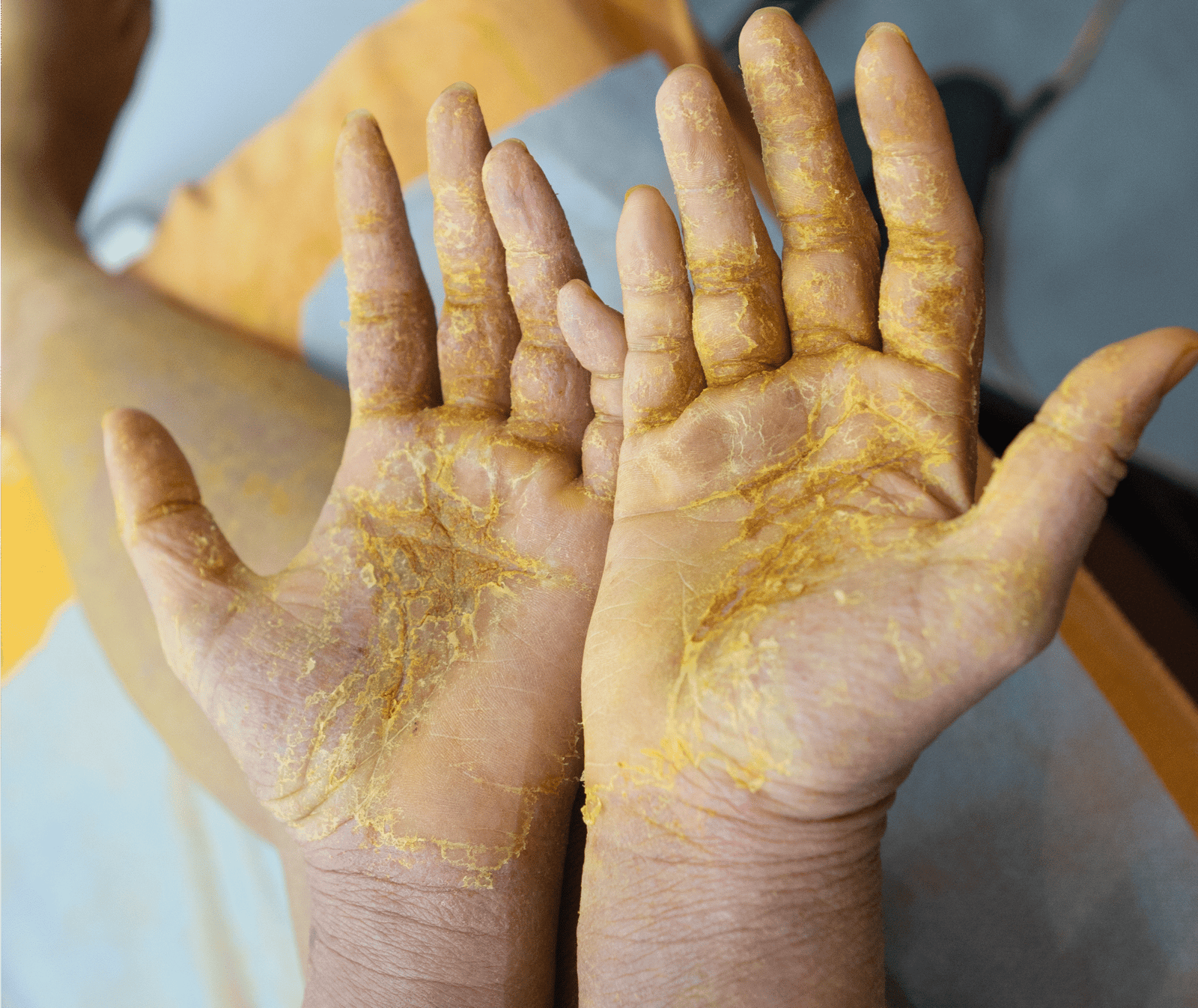
Pathophysiology: Barrier Dysfunction and Immune Dysregulation
Atopic dermatitis is associated with epidermal lipid imbalance, increased transepidermal water loss (TEWL), and excessive activation of inflammatory pathways. As the skin barrier deteriorates, environmental triggers can penetrate more easily, repeatedly stimulating immune responses and sustaining chronic inflammation.
Short-term suppression of inflammation does not necessarily result in long-term restoration of the skin barrier.
A Change in Therapeutic Strategy in 2025
In 2025, after observing abnormal immune indicators and signs of progressive skin barrier deterioration, the patient decided to adopt a different treatment strategy. Rather than continuing increasingly intensive suppressive therapies, he transitioned to using DKD’s biomimetic skin barrier restoration formulation, designed to mimic and support the skin’s natural biological structure.
The goal of this approach was not immediate suppression of inflammatory activity, but rather to support epidermal lipid reconstruction, stabilize the skin microenvironment, and reduce excessive immune activation over time.
The therapeutic focus shifted from suppression toward structural restoration and local immune regulation.
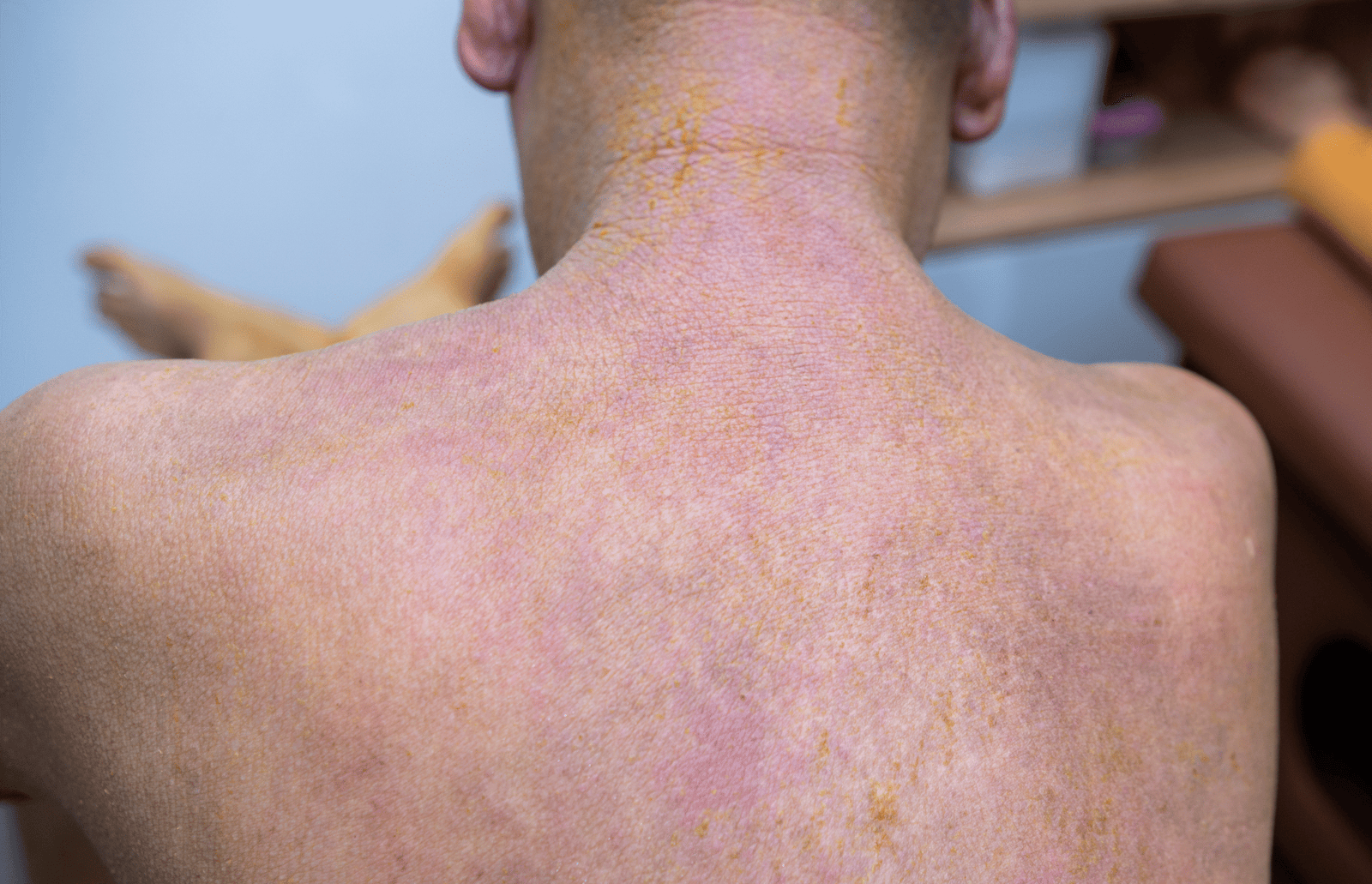
The Skin Barrier Restoration Phase
During this phase, the patient continued using topical biological formulations designed to support epidermal lipid recovery and reduce transepidermal water loss. The process followed the skin’s natural renewal cycle, including periods of dryness, desquamation, and regeneration.
- Reduction in exudation and stabilization of affected areas.
- Gradual improvement in dryness and itching over successive cycles.
- Improved tolerance to environmental exposure.
- Better sleep quality and overall well-being.
Clinical Perspective
Mr. Manh’s case illustrates that when epidermal barrier reconstruction is adequately supported, chronic inflammatory responses may gradually become better regulated. This is not an immediate intervention, but rather a biological process that depends on the skin’s natural regenerative cycle.

PEDIATRIC BURNS
No visible reminder of the accident remains — only healthy skin and a child’s smile. The family agreed to share their journey as a source of hope, so that more children may have access to safe, gentle, and compassionate care…

CHRONIC WOUNDS
After spending 32 years in a wheelchair following an accident, a patient faced the possibility of leg disarticulation due to deep tissue necrosis. While awaiting surgery, the wound showed remarkable recovery, and the patient was eventually discharged without requiring amputation…

RARE DISEASES
A journey alongside a premature infant living with a rare disease for which no curative treatment currently exists. Experiences like these continue to inspire our commitment to research and innovation for patients living with rare conditions…